Cuisine in Luzon vary based on the regions but they all are easily identified by the ingredients that are local to each destination. The most popular culinary destinations in Luzon are Pampanga or the Culinary Capital of the Philippines that serves a mix of savory dishes.
The Bicol region is known for spicy foods that infuses coconut milk. Here are some of the most notable dishes that you can try in this part of the country.
Adobo
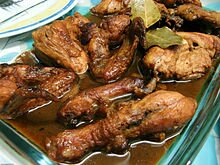
Usually, among the first to be mentioned when talking about Filipino food, adobo refers to the cooking method of stewing in vinegar, peppercorns and bay leaf. Most of the modern versions add soy sauce but there are plenty of regions in Luzon alone that don’t add soy sauce.
The most common things cooked adobo style are pork, chicken (or both together), squid and even vegetables, and these are easily available throughout the country. The earthiness of the bay leaf and peppercorns play well with the brightness of the vinegar and it makes for a hearty lunch or dinner.
Variations include the addition of turmeric in the Batangas, fish sauce in the Cavite version, coconut milk sometimes found in the Bicol region, annatto seeds in Iloilo or even pineapple in some homes. Adobo can come with the braising liquid as a sauce or with the braising liquid reduced until it’s almost a glaze.
The running joke is that there are as many adobo recipes as there are islands in the Philippines (over 7000) but actually, there could be more since almost every Filipino family has an adobo recipe they treasure.
Sinigang
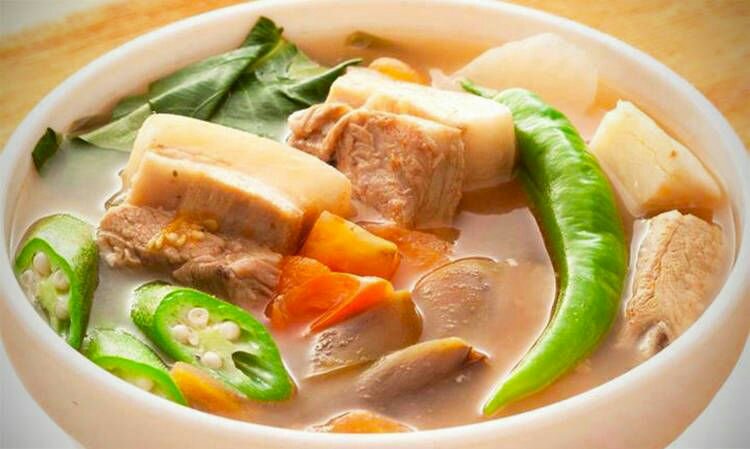
Sinigang refers to a soup soured by a sour fruit or leaf. Usually, sinigang can be pork, beef, salmon or shrimp cooked in a broth with vegetables like kang kong (swamp cabbage), radish, Chinese long beans, tomatoes, and onions.
As for the souring agent, the use of sour fruits largely depends on seasons. Most of Manila and Luzon use tamarind or kamias, while Pampanga uses guava.
Meanwhile, to the south in Iloilo, Visayas they use libas to sour the broth. Most areas in Luzon love to cook the broth very sour, which makes it an excellent mouthwatering appetizer.
Sisig
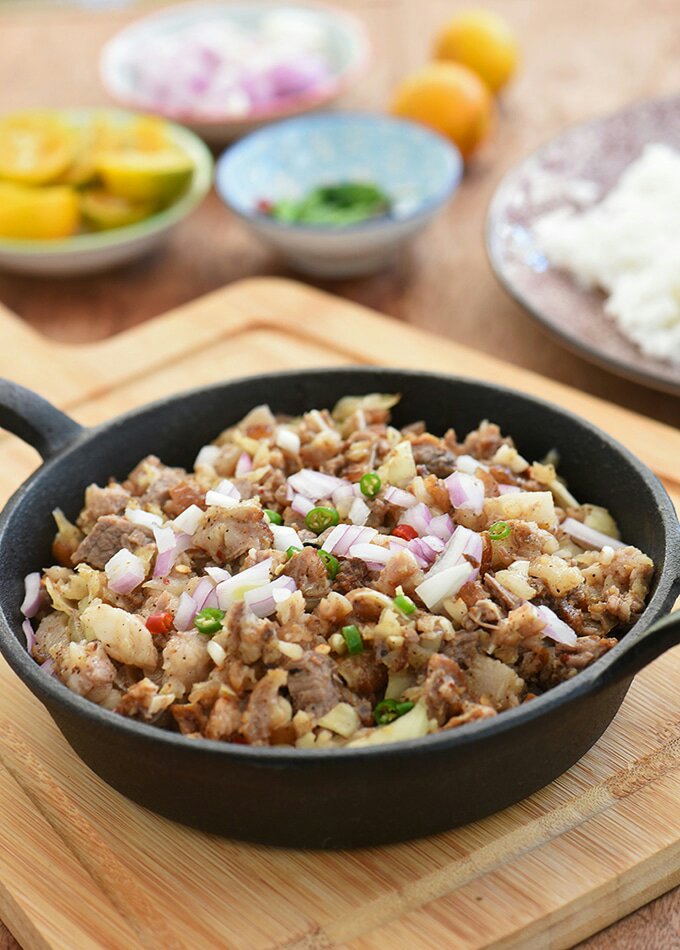
It has become one of the most popular dishes in Filipino cuisine, with versions of it being served internationally to rave reviews. Sisig, which originated in Pampanga, has undergone quite an evolution through the years and that has left it as one of the most misunderstood dishes.
The word “sisig” comes from an old Filipino word “sisigan,” which translates as to “munch on something sour”. Early indications are that the first version of sisig could be a sour salad of chopped vegetables, onions and chili. Sisig “Matua” (meaning “old” in Pampanga) is a dish of pig’s ears and face (maskara) with liver, onions, chilis all marinated in vinegar.
The most commonly enjoyed version of sisig, however, features pig’s ears and face and are boiled and then grilled, chopped and served with onions, chili, liver and calamansi on a sizzling platter.
The dish is a celebration of the interplay of the pork’s richness with the brightness of calamansi and it is a wonderful celebration of textures of both tender and crunchy meat. Meanwhile, modern interpretations have utilized chicken, squid or even milkfish as a main protein, while some have added egg to the dish.
Pinakbet/Pakbet
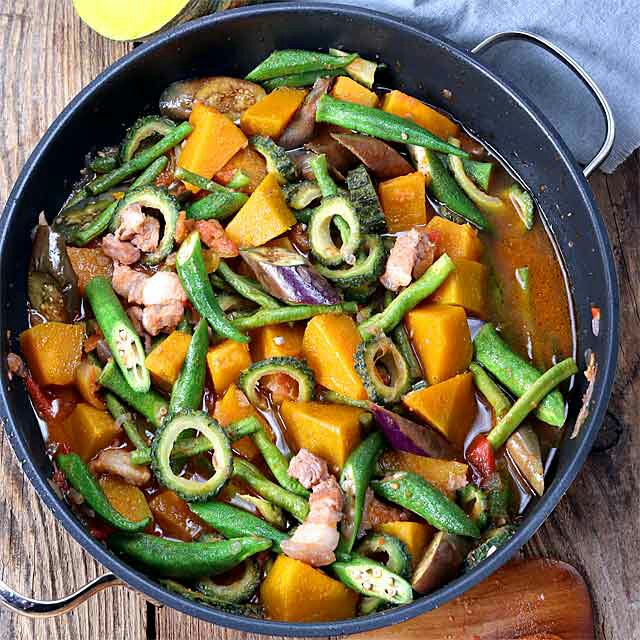
One of the more humble Filipino dishes, pakbet, is a vegetable stew that usually consists of eggplant, string beans, okra, bitter melon and squash and it is usually flavored with bagoong (strong shrimp paste or fish sauce). As with all Filipino dishes, other vegetables may be substituted and depending on the region.
Pinakbet can be a stew which you can easily find in almost every province or it can have a more soupy quality like the ones from Northern regions like Ilocos and Pangasinan.
With its humble ingredients, the dish is considered less glamourous, but millions of Filipino homes enjoy pinakbet with the interplay of salty, sweet and bitter flavors mixed in with the umami from the shrimp paste.
Pancit (Filipino Pancit)
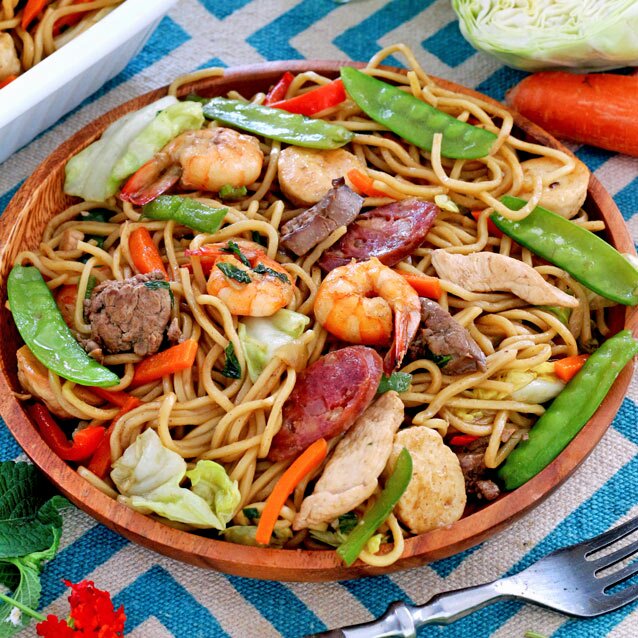
Pancit refers to noodles and it is one of the many dishes influenced by the trades with the Chinese early in Philippine history. Like the adobo, there are hundreds, if not thousands, of pancit varieties in the Philippines, depending on the region.
The most common would be the Pancit Canton, egg noodles stir fried with vegetables and meat, flavored with soy sauce and/or oyster sauce. Pancit Bihon (rice noodles), Cha Misua (angel hair flour noodles) or Pancit Sotanghon (vermicelli) are similar versions using different noodles as base.
Other well-loved varieties include the Pancit Malabon and Pancit Luglog/Palabok which are rice noodles served with a rich anatto tinted sauce with shrimps and pork cracklings and the Lomi, thick egg noodles cooked with meat, shrimp and vegetables in thickened broth.
Just like the Chinese, a lot of Filipinos believe that noodles represent long life and so pancit is served in almost every birthday celebration.
Laing
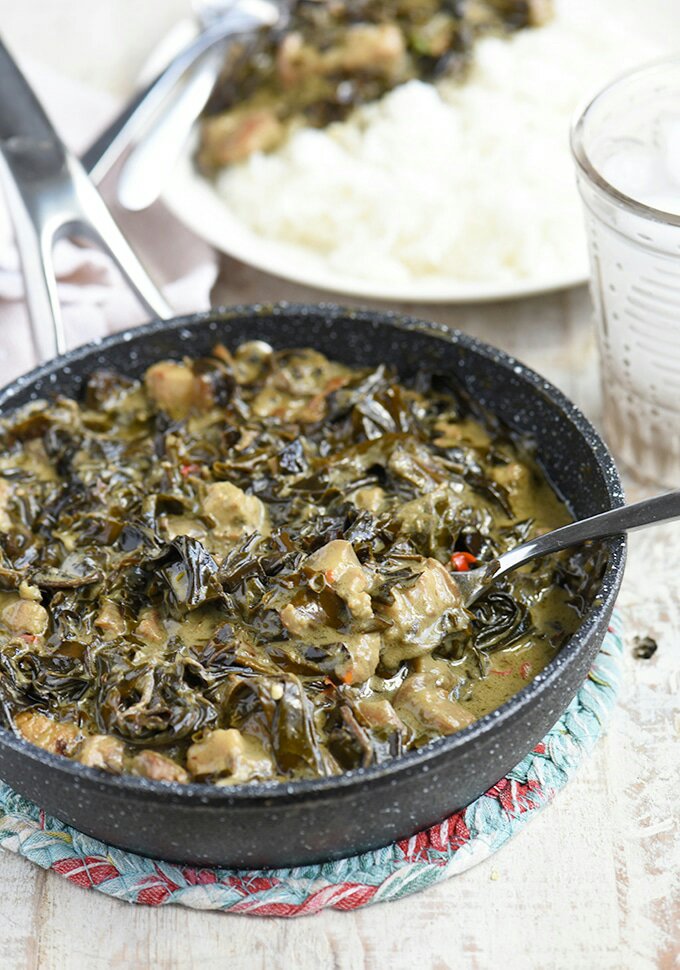
One of the more iconic dishes in the Southern Luzon region of Bicol, Laing is stewed taro leaves cooked with pork, shrimp, chilies and coconut milk. The intense heat of the labuyo chilies is mellowed by the coconut milk and the taro leaves that are dried first before being stewed is made even richer with the addition of the pork. Pieces of cooked taro root may also be added to make the dish more substantial.
Halo-halo
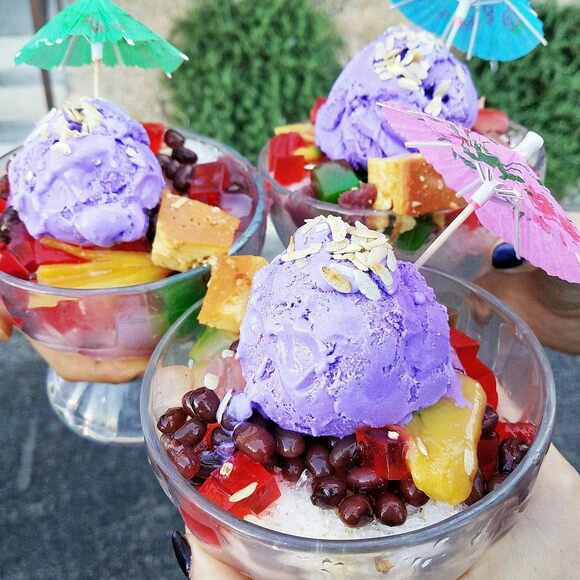
Halo Halo with Ube ice cream
“Halo” is the Filipino word for mix and as the name suggests, this sweet treat is a mix of preserved and sweetened fruits, legumes and gels served with crushed ice and usually, evaporated milk. Halo could also refer to how to best eat this dish as you are expected to mix all the ingredients up as you enjoy them.
Debating the exact ingredients of Halo Halo can lead to controversy, but it really depends on the maker. Most versions would have multiple sweetened fruits or legumes like saba (cardava bananas), sweet potato, chickpeas, white beans, nata de coco (coconut gel), kaong (sugar palm), sago (tapioca pearls), halayang and ube (purple yam jam).
Modern versions also include a scoop of ice cream (usually ube flavored). Some popular versions in Pampanga have as little as three ingredients underneath the ice while a version in Cavite boasts of 12. Whatever the number of ingredients, Halo Halo is an excellent mixture of sweetness and creaminess and never fails to be the perfect antidote to harshly hot Philippine summers.
 Hometown Flavors